D-9-1, Korea's trade visa: TOPIK 3, 60 of 160 points, and a visa that only extends if you actually trade
The trade-business visa runs on its own points system — separate from the D-8-4 startup matrix: TOPIK 3 or higher, 60 of 160 points with a 10-point prerequisite item, premises leased in your own name, and extensions granted only against a real trade record. Figures are operator-published.
Korea has two founder visas and two scoring systems. The technology startup route scores on the OASIS matrix. The trade route — D-9-1, the 무역경영 비자 — runs on a different card: 160 points, a language floor, and an extension regime that pays for performance.
One sourcing note before the numbers. This page's figures come from the Global Start-up Immigration Center — the body that operates the OASIS system — not from a Ministry of Justice notice.
The operator's page carries no verify-with-authority disclaimer of its own; this post does. Confirm every figure against HiKorea before you file.
The threshold
The operator states it in one line: TOPIK 3+ and 60 points out of 160, with a required item worth 10 or more.
The language requirement is not optional seasoning. TOPIK 3 sits in front of the points total — and TOPIK 3 also appears again inside the points system itself, as a 10-point elective item.
Foreigners who meet the points requirement and have no disqualifying grounds can be issued the visa or change their status of residence after examination. The operator notes the change-of-status path is actively permitted for long-term residents — D-2 students, for example — who meet the requirements.
Where the 160 points live
| Item group | Maximum | What is inside |
|---|---|---|
| Prerequisite: trade performance | 30 | Average annual export/import performance over the past two years, in USD bands |
| Prerequisite: trade expertise | 35 | Working experience 20 · relevant university major 15 · OASIS-4+ Basic Trading Course 10 |
| Elective: period of stay | 20 | Registered stay 1-5+ years; highest score counts |
| Elective: education | 20 | Doctorate 20 · master's 15 · bachelor's 10 · college 5 |
| Elective: additional | 55 | Korean college education 30 · KRW 100M+ own capital 15 · TOPIK 3+ or KIIP 10 |
The prerequisite structure is the design feature. You cannot reach 60 on electives alone with no prerequisite anchor — at least one required item must carry 10 points or more.
The operator publishes one worked combination worth exactly 60: the OASIS-4+ Basic Trading Course (3 days, 10 points), a Korean college degree (5), a Korean college education background (30), and three-plus years of stay (15).
The business behind the points
Points alone do not qualify a trade business. The applicant holds an individual business registration — registered as a trade business — and a lease on an independent business establishment in their own name.
One anti-gaming rule deserves a plain-language note: co-representatives with the same qualification do not each bank the full points. The operator's rule divides the sum by the number of foreigners involved.
The extension regime is the real test
The operator is explicit about why: extensions exist to prevent the visa becoming a means of staying in Korea rather than actually operating a trade business.
So the extension scores your performance. First extensions: 5-10 points buys six months, 11-20 buys one year, 21 or more buys two — and the prerequisite item must carry at least 5 points or no extension at all.
The elective block widens at extension: Korean employees (full-time, six months or more) and annual personal income tax payments both convert to points, alongside an advanced trade training course approved by the Ministry of Justice.
Frequently asked questions
- What score does the D-9-1 visa require?
- Per the operator's page: TOPIK 3 or higher in Korean, plus 60 of a possible 160 points, with at least one prerequisite item worth 10 points or more. These figures are published by the Global Start-up Immigration Center, the OASIS operator — not by the Ministry of Justice.
- What are the prerequisite items on the D-9-1?
- Two, together worth up to 65 points: trade performance (average annual performance over the past two years, up to 30 points, in USD export/import bands) and trade expertise (up to 35 points — working experience 20, a relevant university major 15, or the OASIS-4+ Basic Trading Course certificate 10).
- What fills the elective 95 points?
- Period of stay in Korea up to 20 points; education background up to 20 (doctorate 20 down to college 5); and additional items up to 55 — a Korean college education 30, KRW 100 million or more of own capital in the business 15, and TOPIK 3+ or KIIP completion 10. Duplicate calculation between items is allowed.
- What business setup does the visa require?
- Business registration as a trade business, plus a lease contract for an independent business establishment in the applicant's own name. A co-representative arrangement with a same-qualification foreigner splits the points between the number of foreigners.
- How does extension work?
- Extensions are permitted only with an actual trade record — the operator states the rule exists to prevent use as a means of staying rather than trading. First extensions: 5-10 points buys 6 months, 11-20 buys 1 year, 21+ buys 2 years, and the prerequisite item must carry at least 5 points.
- Where can I verify these figures?
- With the issuing authorities — HiKorea (hikorea.go.kr) or the Korea Immigration Service — before filing. The operator's page itself carries no such disclaimer; this one does, because the figures here are the operator's publication, not a ministry notice.
Sources
- Global Start-up Immigration Center (OASIS operator), D-9-1 page — points system, requirements, extension rules — read 2026-09-01
- Global Start-up Immigration Center (OASIS operator), home page — operator identity and OASIS system description — read 2026-09-01
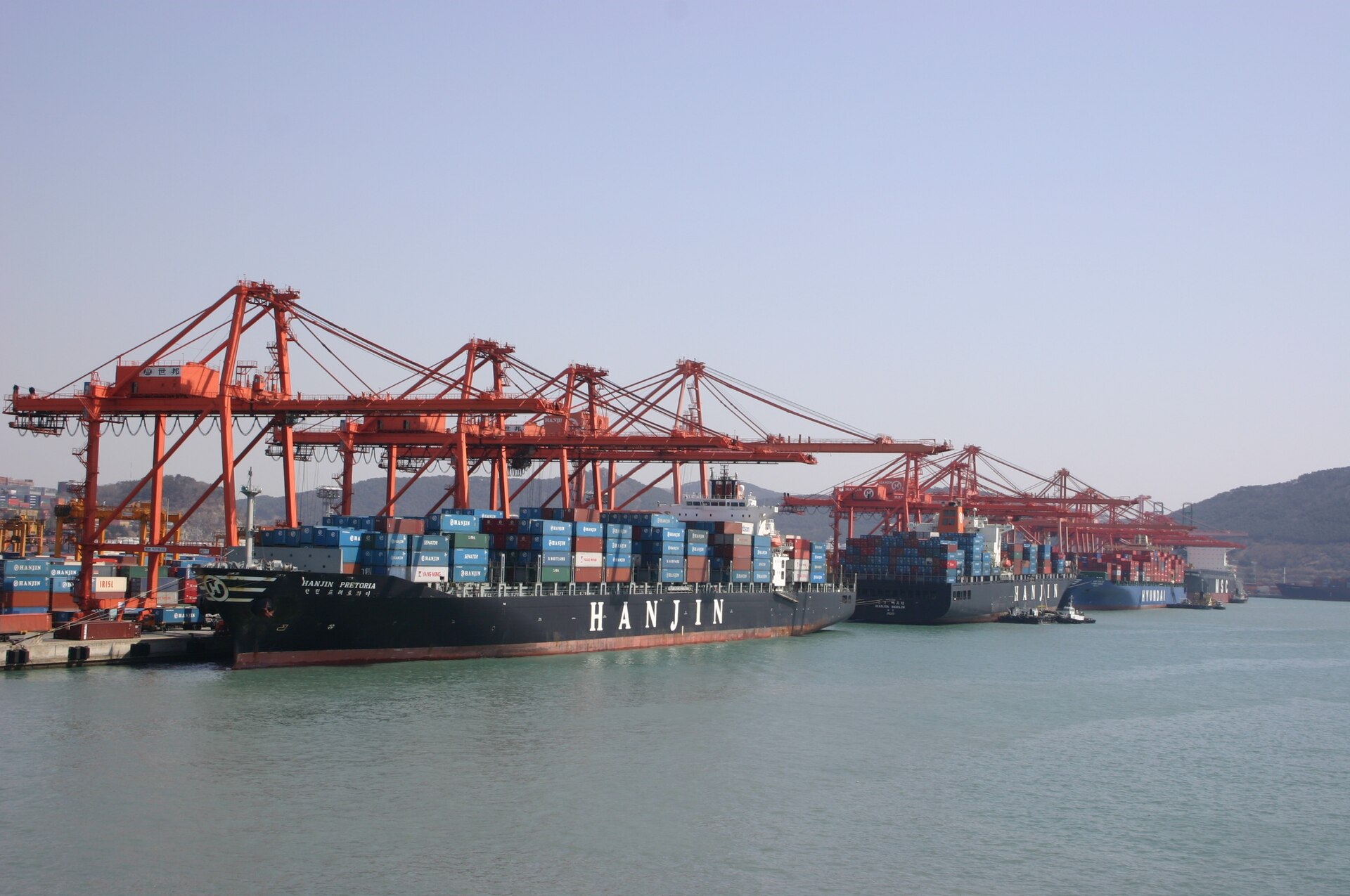
- Hero photograph: Busan Container Terminal by Niels Johannes, Wikimedia Commons, CC BY-SA 4.0 — read 2026-09-01
Everything above is the rule as published. See how it applies to your case.